




Table of Contents

6 min read

We’ve all heard the dire warnings: “Never put metal in the microwave!” But here’s a little-known secret that might just blow your culinary mind: not all metals are microwave no-nos. Thanks to a specific steel composition and smooth, rounded design, some stainless steel lunchboxes defy the conventional wisdom and make microwaving with metal not only possible but safe. So, how does it all work, and what should you know before you start nuking your leftovers in stainless style? Let’s dive in!

How Do I Know Which Stainless Steel Boxes Are Safe?

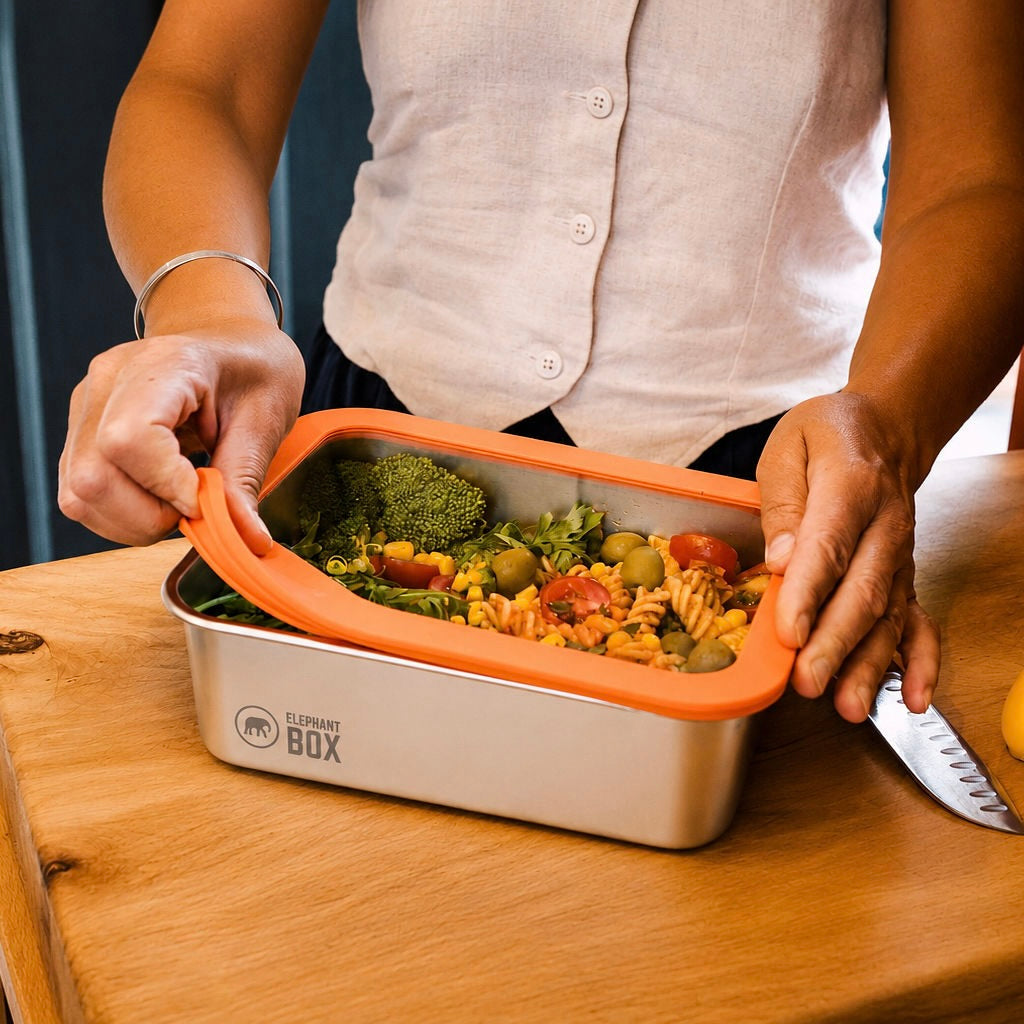
Be sure to check with the manufacturer. Our Prep & Store range is fully microwave safe.

to see our complete range of microwave-safe options — including the Prep & Store Containers and our glass-based Lunch Bowls — take a look at our stainless steel & glass meal prep containers collection.

So, How Do These Work in the Microwave?

First things first, let’s address the science behind why these stainless steel boxes don’t turn your microwave into a mini fireworks display. Unlike some metals that can cause sparks and arcs, these boxes are crafted from stainless steel with a design that prevents such mishaps. Their smooth, rounded edges help distribute electromagnetic waves evenly, avoiding the sharp edges that can cause sparking.

Rigorous testing and adherence to stringent safety standards ensure that these boxes are microwave-friendly. 

We’ve had these in daily rotation in our own kitchens for years — the same box that goes in the fridge tonight can go straight into the microwave tomorrow, no swapping containers, no second-guessing.

Common Myths About Metal in the Microwave

Metal and microwaves have a complicated reputation, and most of it comes down to a few myths worth clearing up.

Myth: any metal in the microwave will cause a fire. In reality, it’s not the metal itself that’s the problem — it’s sharp edges, points and thin material (think crumpled foil or cutlery) that concentrate the microwave’s electromagnetic field and cause sparking. Smooth, rounded, thicker metal doesn’t behave the same way.

Myth: if it’s stainless steel, it must be microwave safe. Not quite — material is only part of the story. Shape and design matter just as much, which is why we only class our Prep & Store Containers and Lunch Bowls as microwave safe, not every stainless steel product we make.

Myth: a spark means the microwave is broken. Usually not — a spark is the microwave reacting to an unsuitable shape or material, not a fault with the appliance itself. It’s a sign to stop and switch containers, not to call an engineer.


What Do I Need to Know Before Putting These Boxes in the Microwave?

Alright, you’re ready to test the waters. But before you start, here are some crucial tips to ensure your microwaving experience is both safe and effective.

1. Compatibility: If your microwave dates back to the Stone Age (okay, maybe just a few decades), specifically older 915 MHz models, these boxes are a no-go. Stick to modern microwaves up to 1000W for best results.

2. Initial Use: Give all parts a good wash with warm, soapy water before the first use.

3. Condition: Avoid using any boxes that have major dents or deep scratches. While the boxes are designed for microwave use, significant damage can compromise their safety.

4. Avoiding Sparking: Remember the cardinal rule of microwave metal management: no cutlery, no foil, no multiple boxes at once. Heat one box at a time to keep things spark-free.

5. Heating Time: Stainless steel takes a bit longer to heat compared to plastic or glass. So, expect slightly longer microwaving times.

6. Contact with Metal: Ensure the box doesn’t touch any metal surfaces inside the microwave, such as metal plates, racks, or the microwave walls. We’re aiming for safe, not shocking.

7. Microwave Power: These boxes are best buddies with microwaves up to 1000W. Anything higher might be a bit too intense.

8. Handling: Post-microwave, the box will be hot. Protect your hands with oven gloves or a tea towel. Safety first, always.

9. Lid Management: When microwaving our Clip & Seal containers or Lunch Bowls be sure to remove the lid first. Both the base and the lid of the Prep & Store containers are fully microwave safe. 

Not Microwaving? Here’s the Rest of the Range

Not every Elephant Box product is built for the microwave — and that’s by design. Our lunch boxes and our food storage range each do a different job. If you’re packing lunch for school or work rather than reheating, our stainless steel lunch boxes are built for carrying food on the go, not for the microwave. Looking specifically for your child’s lunchbox? Our kids lunch boxes for school cover sizes from nursery age right through to teens. And to see where the Prep & Store Containers sit within our wider range, browse the full stainless steel food storage containers collection.

Wrapping Up 

Using stainless steel boxes in the microwave might sound like a magic trick, but it’s really just good design and smart science. By following these tips, you can enjoy the convenience of microwaving without the worry.

Ready to add microwave-safe containers to your kitchen? Explore our full range of stainless steel & glass meal prep containers, including the microwave-safe Prep & Store sets and Lunch Bowls.

So next time someone tells you metal and microwaves don’t mix, you can smile knowingly and share a bit of microwave wisdom.

>>Click here to check out our microwave safe stainless steel food containers<<

Frequently Asked Questions

Which Elephant Box products are microwave safe?

Our Prep & Store Containers, Clip & Seal and Lunch Bowls are microwave safe (base only, lid removed). You can browse the full range on our meal prep containers collection.

Is the whole food storage range microwave safe?

No — only the Prep & Store, Clip & Seal and Lunch Bowl ranges are designed for the microwave. The rest of our stainless steel food storage containers are built for the fridge, freezer, and everyday storage rather than reheating.

Are Elephant Box lunch boxes microwave safe?

No. None of the boxes in our stainless steel lunch boxes range are designed for microwave use — they’re built for carrying food to school or work, not for reheating. If you need something for the microwave, our meal prep containers are the better fit.

Are kids’ lunch boxes microwave safe?

No — our kids lunch boxes for school are designed for carrying lunches, not reheating them. For warming food at home, the Prep & Store range is the better option.

Why can some stainless steel go in the microwave when I’ve always been told metal can’t?

It comes down to design. Sharp edges and points — like on foil or cutlery — are what cause the sparking you’ve probably seen in a microwave before. Our Prep & Store Containers, Clip & Seal and Lunch Bowls use smooth, rounded stainless steel that distributes electromagnetic waves evenly, so there’s no arcing.

Can I microwave the lids as well as the base?

No — the lids (other than the Lunch Bowl lid) aren’t microwave safe. Always remove the lid before microwaving, except for the Lunch Bowl, where you just need the vacuum tab up.

Will an older microwave work with these containers?

Not always. Very old 915MHz microwaves aren’t compatible — stick to a modern microwave up to 1000W for best results.

Can I microwave more than one container at a time?

No — heat one box at a time, and make sure it isn’t touching any metal surfaces inside the microwave, such as racks or walls, to avoid sparking.

Can I still microwave a container that’s scratched or dented?

We’d recommend against it. Avoid microwaving any box with major dents or deep scratches — while they’re designed for microwave use, significant damage can compromise that safety.

What’s the difference between the Prep & Store Containers and the Lunch Bowls?

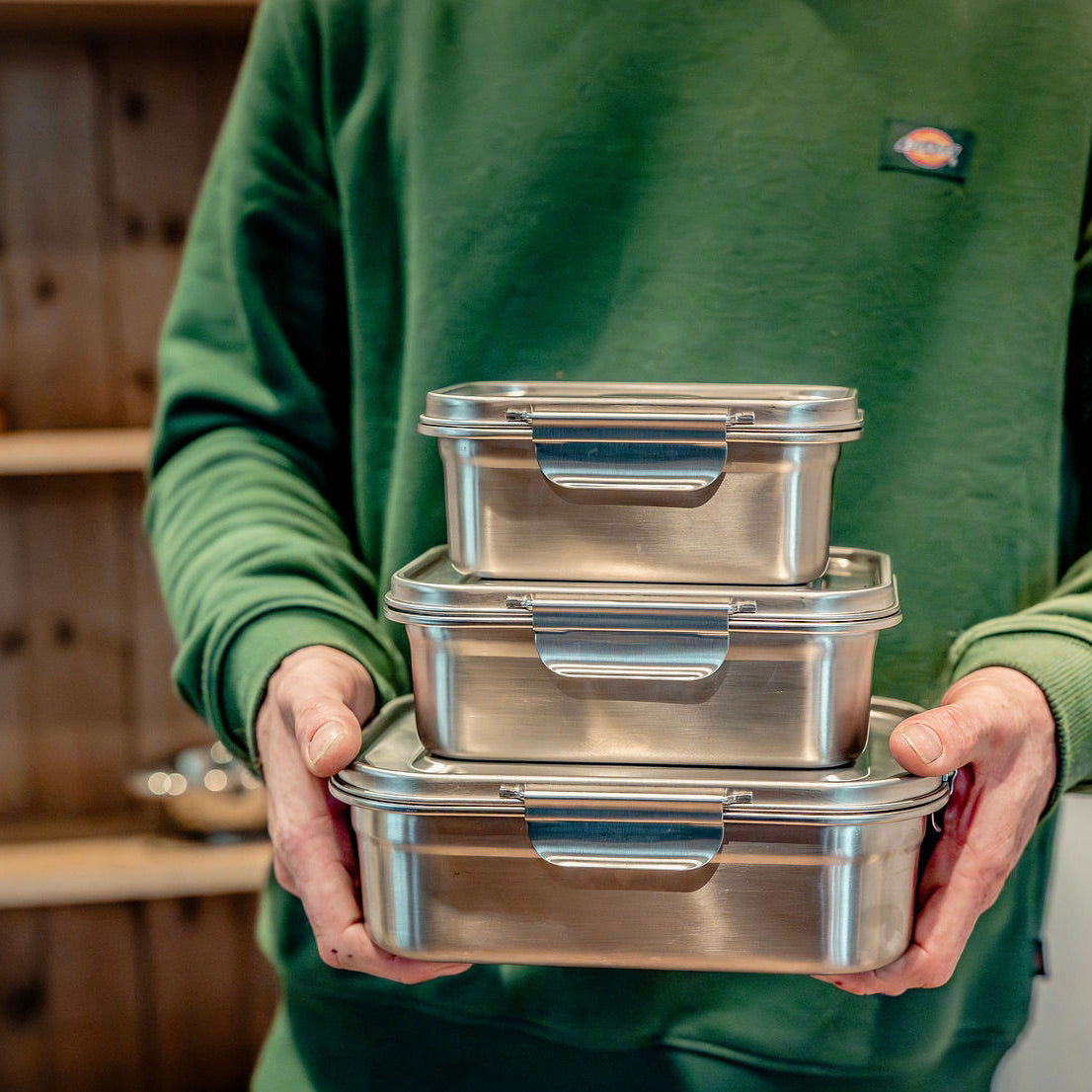
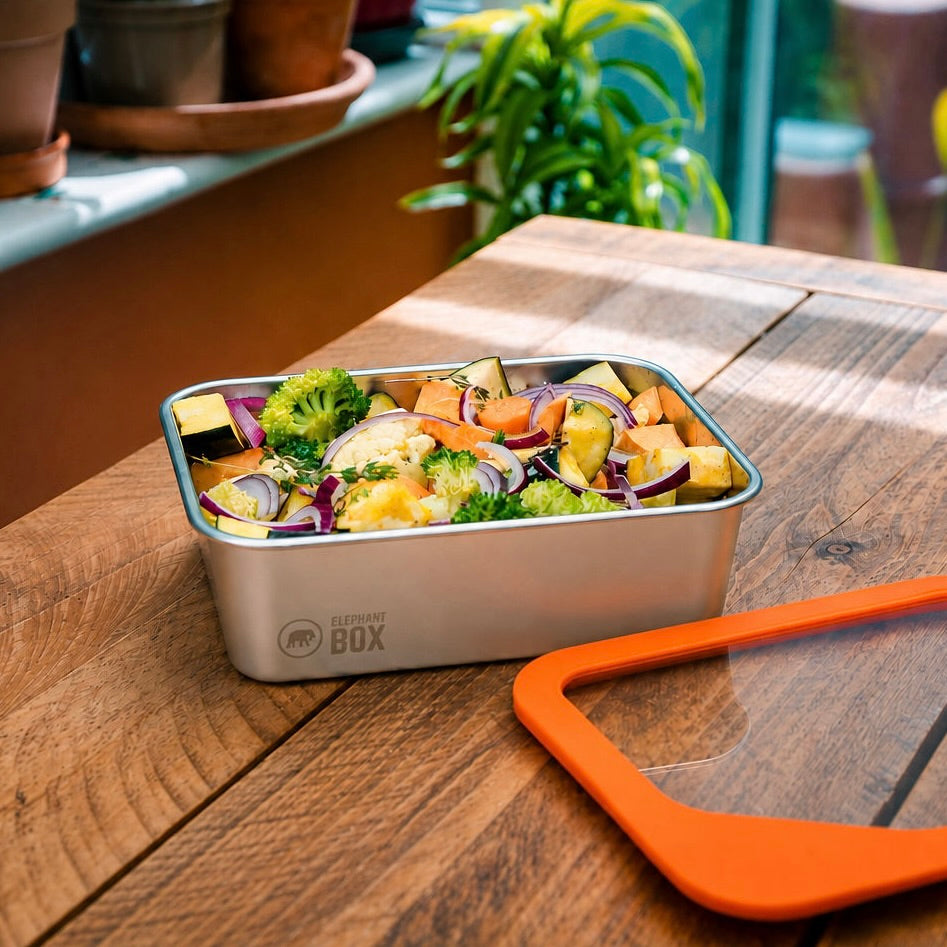
The Prep & Store Containers have a stainless steel base and a glass lid, and stack neatly for the fridge and freezer. The Lunch Bowls have a glass base and a stainless steel lid, and are designed for eating straight from the container. Both are microwave safe, oven safe (base only, up to 200°C) and freezer safe — compare the full range on our meal prep containers collection.


Also in BLOG

What BBC Radio 4's Experts Say About Plastic Food Containers

What BBC Radio 4's Experts Say About Plastic Food Containers

5 min read

A recent episode of BBC Radio 4's Sliced Bread explored the evidence behind plastic food storage, bringing together leading experts in toxicology and food packaging.

Read More
How to Throw a Kids’ Birthday Party Without the Waste

How to Throw a Kids’ Birthday Party Without the Waste

3 min read

A guide to simple swaps kids and the planet will love, from Party Kit Network’s Isabel Mack.

Read More
25 Healthy Kids’ Lunchbox Ideas

25 Healthy Kids’ Lunchbox Ideas

3 min read

Beat lunchbox boredom! 25 healthy, easy, and colourful lunch ideas for kids — wraps, snacks, smoothies, and tips for busy parents.

Read More